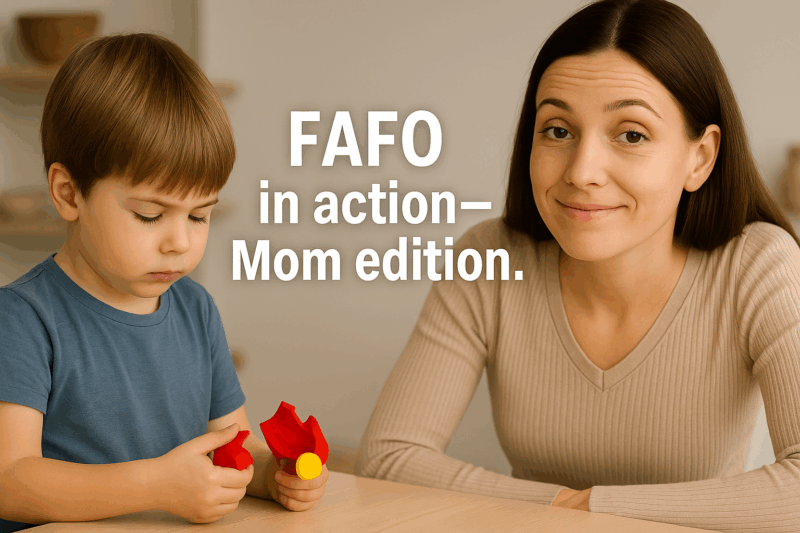
The Parenting Acronym That Made Me Gasp (and Then Laugh)
Let me start by saying: I know what you’re thinking. FAFO?! That sounds… intense. When I first heard this trendy acronym—short for “Fool Around and Find Out” (yes, the mom-ified version)—I raised an eyebrow too. But hear me out: behind the edgy name is actually a super practical, love-filled parenting approach that helps our kids grow up confident, responsible, and resilient.
We’re talking about letting natural consequences do the teaching—while still providing plenty of hugs, guidance, and boundaries. It’s not harsh parenting, it’s smart parenting.
And yes, I’ll share some stories of how I’ve totally botched this and learned along the way.
(Mom tip: You’re doing just fine. We’re all figuring it out as we go.)
What Is FAFO Parenting, Really?
FAFO parenting embraces the idea that kids learn best when they experience the real-life outcomes of their choices. Instead of rescuing them from every mess or nagging them endlessly, we step back (just a bit!) and let natural consequences do the teaching.
It’s not about being mean or throwing kids into the deep end. It’s about creating a safe space where they can explore their independence, make decisions, and—yes—learn what happens when they forget their coat or ignore bedtime routines.
Core Principles of FAFO Parenting:
- Safe-to-Fail Spaces: Kids are allowed to make mistakes—but within safe and loving limits.
- Natural Consequences Over Punishment: Forget forced apologies or unnecessary grounding—real-world results speak louder.
- Respectful Communication: We don’t yell or shame. We stay calm, kind, and consistent.
- Parental Presence, Not Control: You’re their guide, not their dictator.
Why It Works: The Brain Science and Real-Life Payoffs
Child development experts agree: kids need to experience the cause-and-effect of their actions in order to build critical thinking skills, problem-solving abilities, and emotional regulation.
When we let our kids find out that skipping homework results in a lower grade—not a mom lecture—they’re more likely to connect the dots and take ownership. Plus, it builds resilience when they realize they can bounce back from small failures.
Benefits of FAFO Parenting:
- Encourages independence
- Builds self-esteem
- Reduces power struggles
- Prepares kids for adulthood
- Fosters trust between parent and child
- Cultivates emotional intelligence
- Supports natural curiosity and risk-taking in a safe way
(Mom tip: The earlier you start this, the easier the teenage years will be. Pinky promise.)
How to Apply FAFO Parenting by Age Group
Let’s break this down into realistic strategies for different ages—from toddler tantrums to teen drama. Each stage has unique opportunities for teaching through natural consequences, and we can tailor our approach to their development level.
Toddlers (Ages 2–4):
This age is all about exploration and testing boundaries. They don’t understand abstract reasoning yet, but they sure understand cause and effect.
Examples:
- Refusing to wear a coat? A chilly walk to the car teaches them quickly.
- Throwing a toy? The toy goes away for a while.
- Refusing to eat? They feel hungry until the next snack time.
How to Support:
- Stay calm. Validate feelings. “You didn’t want to wear your coat. It’s cold, huh?”
- Be consistent. The more predictable your response, the quicker they learn.
Preschool & Early Elementary (Ages 5–8):
Kids are becoming more independent and social. They’re beginning to understand rules, fairness, and routines.
Examples:
- Forgot to pack a lunch? Let them experience school lunch or ask the office for help.
- Didn’t clean up toys? They’re not available the next day.
- Didn’t follow bedtime rules? They’re tired the next day.
How to Support:
- Ask reflection questions: “What do you think you’ll do tomorrow to remember your lunch?”
- Offer limited choices: “Would you like to try again or take a break and come back?”
Tweens (Ages 9–12):
Now we’re entering the land of attitudes and bigger responsibilities. They’re testing independence and need space to learn self-control.
Examples:
- Didn’t turn in an assignment? They face the teacher and the grade.
- Left sports gear at home? They miss practice or sit out.
- Broke a friend’s trust? They deal with the relationship fallout.
How to Support:
- Be a sounding board: “What could you try differently next time?”
- Acknowledge growth: “I saw how you handled that situation. I’m proud of your honesty.”
Teens (Ages 13–18):
Teens crave autonomy. Natural consequences here start to mirror adult life—and that’s exactly the point.
Examples:
- Overspent money? No extras until next payday.
- Ignored curfew? They miss out on the next outing.
- Didn’t apply for the summer job? They don’t get it.
How to Support:
- Hold space: Let them process before jumping in with advice.
- Empower them: “How do you want to handle this next time?”
Real Mom Stories: What FAFO Parenting Looks Like at My House
Story #1: The Case of the Forgotten Science Project
My middle schooler once insisted he had everything “under control” for his science fair. Cut to the night before—it was a glitter-filled disaster. Instead of staying up all night with him, I offered help—but he had to own it. He learned the value of planning, and guess what? Next year, he started early.
Story #2: The PB&J Summer
One summer, my daughter flat-out refused to eat anything I cooked. I calmly let her know she could make her own sandwich instead. She ate PB&J for four days before deciding maybe my tacos weren’t so bad.
Story #3: Late to Practice (Again)
When my teen kept missing his morning alarm, I stopped being his backup alarm clock. After being benched twice for being late to practice, guess who never forgot again?
(Mom tip: Letting go is hard—but your kids will surprise you.)
Common Mistakes to Avoid
We’re human, and it’s so tempting to step in or overcorrect. Here’s what to watch out for:
1. Rescuing too quickly
When we solve their problems for them, they miss out on learning. Let them try (and stumble).
2. Using shame instead of support
Natural consequences should teach, not humiliate. Stay calm and kind.
3. Inconsistency
If the consequence keeps changing, kids get confused. Set clear expectations and follow through.
4. Overdoing the consequence
Natural consequences should be proportional and logical—not extreme. For example, if a 5-year-old forgot to grab their sack lunch from home, let them eat school lunch, don’t make them go hungry by refusing to do anything about it. A 5-year-old shouldn’t go hungry.
The Emotional Side: Helping Kids Process
Natural consequences can feel BIG to kids—especially if it involves embarrassment, social issues, or failure. Your role isn’t to fix it, but to help them process.
- Use phrases like: “I can see that was hard for you. Want to talk about it?”
- Offer a hug or quiet time before the conversation.
- Reflect back their emotions: “You’re feeling embarrassed. That makes sense.”
- Remind them: “Mistakes are how we learn. I’m proud of you for facing it.”
FAFO Consequences Guide by Age
Create a visual reminder for your fridge or family command center! Include examples like:
- Age group
- Common scenarios
- Natural consequence
- Supportive follow-up phrases
Partnering with Teachers, Coaches, and Caregivers
Consistency matters. If your child is learning natural consequences at home but gets rescued at school or daycare, it sends mixed signals. Communicate your approach with teachers and caregivers.
- Phrase it positively: “We’re encouraging independence through natural consequences.”
- Share examples: “If he forgets his homework, we’re okay with him facing the result.”
- Encourage collaboration: “What’s worked well for you in helping kids take responsibility?”
When NOT to Use FAFO Parenting
Natural consequences are powerful—but they aren’t always appropriate. Use caution when:
- Safety is at risk: Never let a child experience harm just to learn a lesson.
- Emotional well-being is fragile: If your child is anxious, depressed, or overwhelmed, consequences need to be paired with extra support.
- The stakes are too high: Losing a scholarship, risking legal issues, or deep emotional damage? Step in with boundaries.
You’re a Brave, Brilliant Mom
Look, FAFO parenting isn’t about being perfect. It’s about showing up, letting go (just a bit), and trusting that your kids are capable of learning, growing, and becoming amazing humans. They won’t get everything right—and neither will we. But with this approach, we’re building something way more important than perfect kids:
We’re building kids who can handle life. And that, mama, is the real win.
Now it’s your turn: Have you tried FAFO parenting? What natural consequences have taught your kids the most? Let’s chat in the comments!
(Mom tip: You’ve already got the most important parenting skill—you care. The rest? We learn as we go.)


Leave a Reply