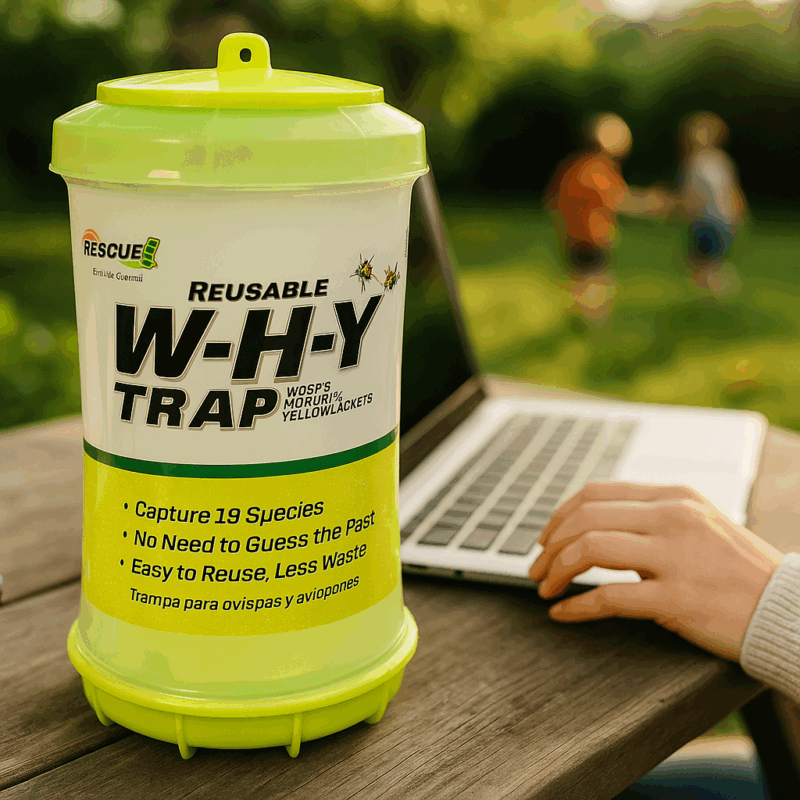
Hey friend — before we dive in, let me say: I know how nerve‑wracking it is to see wasps buzzing around your yard, especially when you’ve already tried everything. I’ve been there — swatting, yelling, hiding indoors — until I decided to test a few traps and see what really works (and what backfires). In this post I’ll walk you through:
- What makes wasps “mad” (and when they’re worst)
- The four types of traps I used (with real pros & cons)
- My results: which trap was the “winner”
- Practical tips to avoid attracting wasps (so you don’t have to keep trapping forever)
- My final recommendation + next steps
Grab your diet coke — let’s turn your yard from “wasp zone” back into your relaxing oasis 🪴
Why Wasps Get Aggressive — and When
Before we talk traps, it helps to understand why wasps go from low-key to full-on dive‑bomb mode. Once you know the patterns, you can (hopefully) avoid triggering them.
Wasp biology & life cycle — a quick primer
- In spring, a queen emerges from hibernation, finds a nest site, and begins laying eggs.
- Over the summer, workers (sterile females) build out the nest, forage for food (insects, nectar, sometimes sugary leftovers) and care for brood.
- By late summer / early fall, the nest is large and food sources (nectar, insects) decline.
- As fall approaches, wasps become more desperate, more defensive, and more likely to venture near people, trash, sweet foods, etc. Moyer+3Wondercide+3Miller the Killer+3
Here are key triggers for aggression:
- Food scarcity: As natural insect prey, nectar, and sweet sources dwindle, wasps search out whatever they can — including your soda, fruit scraps, grills, and trash. Miller the Killer+2Moyer+2
- Territorial defense: As the colony grows, the nest becomes more defended. Workers are more likely to sting if anything (or anyone) gets too close. harrispestcontrolinc.com+2Wondercide+2
- End-of-season desperation: Late in the season, worker wasps have less to lose and may take more risks or act more aggressively in defense of their nest. Miller the Killer+2Wondercide+2
- Disturbance or vibrations: Jumping near nest walls, loud noises, or sudden movement can be perceived as threats.
- Chemical signals / alarm pheromones: In some cases, one wasp reacting can trigger others to become defensive.
So, in late summer / early fall, you’ll see more wasps, more aggression, more stings. It’s not just your imagination — colonies are at their peak and food is getting scarce. harrispestcontrolinc.com+2Wondercide+2
My Trap Test: What I Tried & What I Learned
Here’s where I geek out. I set up four different types of wasp traps around my yard over several weeks. I tracked catches, effort, ease, safety, and side effects (like attracting other insects). Below is a breakdown of each trap type, the pros and cons, and how they performed.
Trap #1: Liquid lure + yeast / commercial refill style (Spectracide‑type trap)
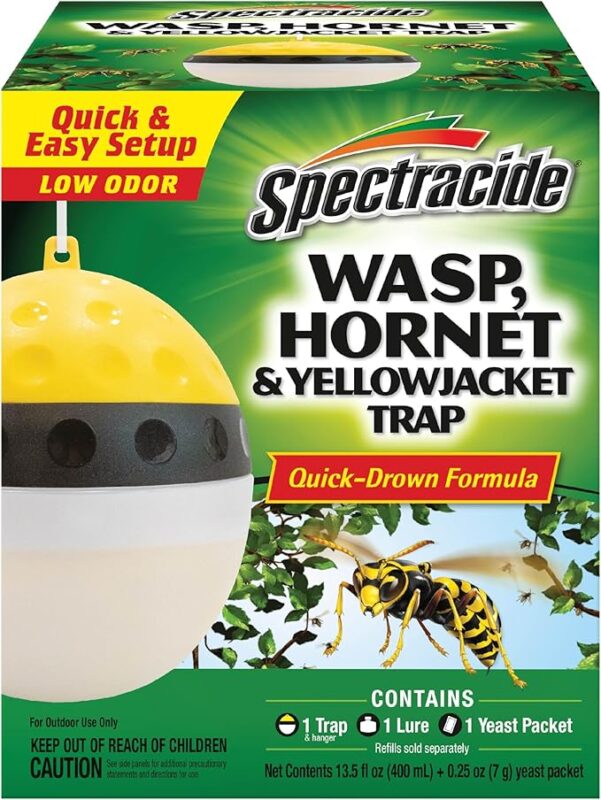
What it is / how it works
This trap uses a pre‑made lure (or refill) that includes sugar + yeast or attractant. Wasps fly in, can’t easily find a way out and get trapped in the liquid.
Pros
- Very low effort: buy the lure, add it to trap, hang it, check occasionally
- Can last up to 30 days per refill (depends on weather, evaporation)
- Effective at attracting wasps from a radius if placed properly
- Common, affordable, easy to find
Cons / pitfalls
- Attracts all wasps in area — even those that wouldn’t otherwise come into your yard. Sometimes you draw in strangers. abcwildlife.com
- If liquid evaporates or gets diluted (rain), its effectiveness drops
- Need to empty and reset if trap gets full or clogged
- Disposal of dead insects + liquid can be messy
My results & notes
This trap caught a decent number of wasps consistently. It was reliable, though on super hot days I had to top off the liquid. In one spot I noticed after plugging in this trap, a few more wasps flew close to the seating area before getting caught — meaning it may attract what you’re trying to repel if not placed with buffer zones.
Trap #2: Reusable “W‑H‑Y” style (multi‑chamber / reusable plastic trap)
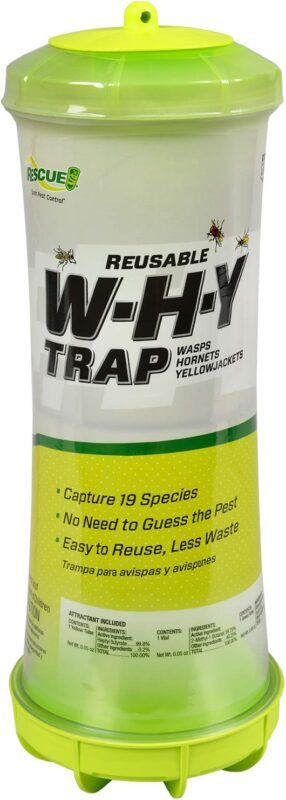
What it is / how it works
This is a reusable trap often with multiple chambers or funnels. You bait it and re‑use it over the season. The design may allow you to see trapped insects and empty them.
Pros
- Environmentally friendlier (less waste) Buzz Boss
- You can reuse and clean it, adjust bait timing
- Often more durable and sturdy
- You can monitor how many are being caught
Cons / pitfalls
- More work: disassemble, clean, refill
- Sometimes more expensive upfront
- Possible to lose sealing, leaks, or the trap may degrade
- If not sealed well, wasps might escape
My results & notes
This trap was my favorite for control. Because I cleaned it and re-baited, it stayed “fresh” and effective longer. I also liked that I could see clearly when it was getting full and empty it before overflow. But I confess — I found it a bit tedious to maintain during peak wasp season (hot, sweaty, sticky). Still, the consistency of captures was strong.
Trap #3: Clear plastic “jar / lantern” style trap (transparent with ports)
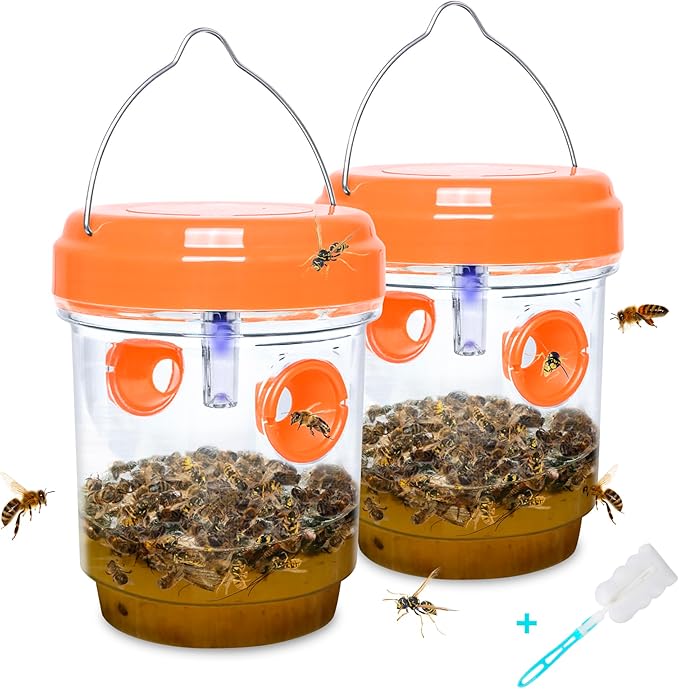
What it is / how it works
This traps design looks like a clear plastic jar or lantern with entry holes. The idea is that wasps fly in (often toward bait at bottom) and then can’t find their way out. The transparency helps you see catches and leaks.
Pros
- You can see inside (monitoring)
- Aesthetically less obtrusive (not a solid black blob)
- Fairly simple to construct or purchase
- Easy to swap bait or liquid
- Simple design
Cons / pitfalls
- Sometimes light in the trap confuses wasps and helps them escape
- Clear walls may heat up in sun, causing bait to evaporate or degrade
- Small openings or edges may allow escape if design is not perfect
- May attract other insects (flies, non‑target insects)
My results & notes
I used this trap as a “visually obvious” trap. It was very effective, especially in early evening. But on very sunny walls, it heated too much and bait dried out quicker. I found myself filling it up more often. Also, some small flies (non‑wasps) showed up, which made cleaning a bit frustrating.
Trap #4: Cage / mesh + sticky / “trap tube” style design
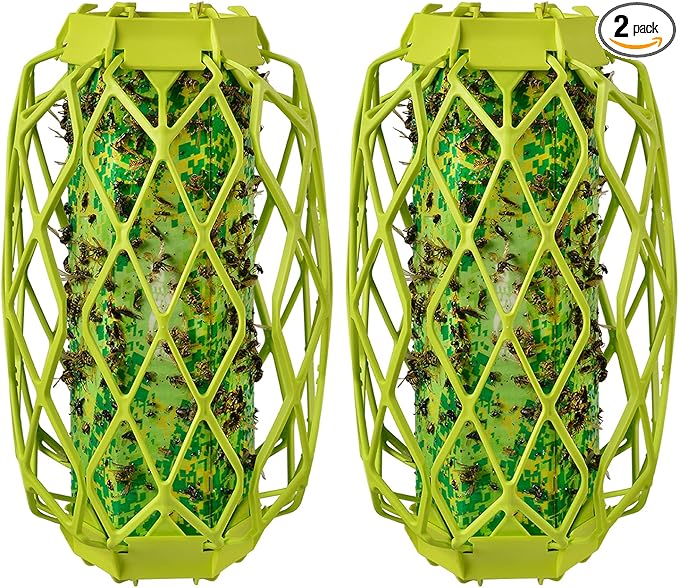
What it is / how it works
This trap is more of a cage or mesh exterior with a sticky or internal lure tube. The outer “cage” protects the lure inside. Wasps enter through holes or slits, then get stuck or fall into an internal chamber.
Pros
- Protective exterior limits accidental contact
- May reduce accidental captures of non‑target insects (if holes sized well)
- Durable and robust
- Good for areas with wind or where you want trap protection
Cons / pitfalls
- More complex design — more parts to fail
- Might reduce airflow or scent diffusion (making bait less attractive)
- Harder to clean
- Sticky surfaces lose effectiveness over time
My results & notes
This trap underperformed compared to the others in my test. It caught some wasps, but not nearly as many. I suspect the exterior cage made bait scent diffusion slower. Also, sticky surfaces started to lose grip after dust or debris accumulated. For me, it required the most fiddling.
Comparison Summary Table
| Trap Type | Ease of Use | Maintenance Work | Attractiveness / Efficiency | Side Effects / Risks | Best Use Scenario |
|---|---|---|---|---|---|
| Liquid lure refill style | Very easy | Low‑medium (top up) | Good, steady | May attract outsiders, messy | General yard, “set-and-forget” zones |
| Reusable funnel / multi-chamber | Moderate | Medium (cleaning, refill) | Good | Requires effort, seal maintenance | Who wants long-term control |
| Clear jar / lantern design | Easy | Medium (refill, clean) | Very Good, in shade | Evaporation, small escapes | Visually checkable trap zones |
| Cage / mesh + sticky / tube | Hardest | High | Lower (in my test) | Lower catches, complexity | Protected areas or windy spots |
From my setup and tracking, Trap #3 (lantern style trap) came out on top for steady performance and control over the season, despite the extra maintenance. But the Reusable “W‑H‑Y” style was a close second for “set it and forget it” convenience.
Why I Declare Winner — My Results
After several weeks, here’s the breakdown:
- Trap #3 (lantern style trap) caught the most consistent numbers of wasps (especially early morning and late afternoon)
- It didn’t degrade as fast because I could clean and refresh it
- It stayed functional under heat better than the W-H-Y and the cage style
- The trick was to use beer, For what ever reason beer attracts more wasps than any other formula
So, my winner = Clear plastic “jar / lantern” style trap (transparent with ports) (Trap #3) in terms of control, reliability, repeating utility and over all effectiveness.
However — there’s no one-size-fits-all. If you want “set and forget” just call a pest control company and have them spray every 3 months. But if you need to fix the problem yourself or you’re in between scheduled visits remember placement of the trap and bait make more of a difference than the brand.
How to Place, Maintain & Use Wasp Traps Effectively
Even a great trap fails if it’s placed badly or not maintained. Here are mom-tested tips:
- Position away from human activity
Put traps 10–20 feet away from seating, doors, walkways. You want wasps lured away from where you’ll be. - Height & shade matter
Hang or place traps around 4–6 feet high, in partial shade. Full sun will degrade bait faster; too shaded might reduce scent diffusion. - Use buffer traps
Set up a “sacrifice trap” further out to draw in wasps from the wider area, so your main traps protect your yard. - Monitor & refresh bait regularly
Check weekly or more often in heat. Top up, clean, or replace bait before it becomes weak, cloudy, or spoiled. - Replace or clean when full
Don’t let traps overflow or clog — they’ll lose efficiency or even let insects escape. - Be consistent early in season
The earlier you deploy traps (late spring / early summer), the more you prevent colonies from establishing. Jamison Pest and Lawn - Use non-attractive colors
Yellow traps tend to attract insects; avoid putting them near bright flowers or décor that mimic those tones. - Avoid placing next to trash or sweet smells
That competes with your bait and may dilute effectiveness.
Strategies to Avoid Attracting Wasps (So You Don’t Need So Many Traps)
Traps are reactive. To reduce wasp pressure, combine them with preventive habits. Here’s what I learned and what expert sources suggest:
1. Limit food and scent attractants
- Always cover sweet drinks, fruit, soda when outdoors
- Avoid leaving pet food bowls or scraps outside
- Clean spills immediately
- Use tightly sealed, covered trash cans
- Rinse recyclables before putting them in bins
Experts emphasize this: as natural food sources drop, wasps turn to human food. Miller the Killer+2Wondercide+2
Also, open trash can = dinner bell for wasps.
2. Seal or block nesting sites
- Caulk cracks, close gaps in eaves, siding, or soffits
- Screen vents or openings
- Don’t leave hollow pipes, old logs, or cluttered wood piles near the house
- Move storage items away from walls so they don’t become “quiet corners” wasps like Tom’s Guide+2The Spruce+2
3. Use natural repellents & deterrents
- Some essential oils like peppermint, lemongrass, clove are said to repel wasps (use diluted sprays)
- Plant herbs like mint, basil, lemon balm — wasps dislike their scent The Spruce+1
- Hang decoy nests — sometimes territorial wasps avoid building near other nests
- Use strong scents (citrus peels, eucalyptus) around potential nest zones
4. Keep yard activity
Wasps prefer quiet, undisturbed places. Moving furniture, trimming shrubs, stepping into different configurations of yard layout can make it less friendly for nest building. Tom’s Guide
5. Maintain good lighting & airflow
Wasps dislike drafty, windy areas. Also, avoid overly warm, dark corners.
6. Stay calm & avoid swatting
Swatting can incite stings because wasps may release alarm pheromones. Tom’s Guide+1
7. Monitor regularly
Walk your yard occasionally and look for early nests (small ones early season). Removing small nests early is easier and safer (with proper gear or professional help).
Sample Seasonal Timeline & Checklist (Mom’s Version)
Here’s how I’d lay this out if I were prepping for wasps season next year:
| Time Period | Action Steps |
|---|---|
| Late Winter / Early Spring | Walk perimeter; seal cracks; remove clutter and woodpiles; prep traps; trim vegetation |
| Spring (queen foraging / nest start) | Hang first traps; monitor bait; check for small nests; maintain yard cleanliness |
| Early to Mid Summer | Continue traps; refresh bait; monitor insect populations; adjust trap positions if needed |
| Late Summer / Early Fall (peak aggression) | Maximum trap deployment; frequent bait refresh; extra vigilance with food outdoors |
| Late Fall / End of Season | Remove traps; store or clean reusable ones; tidy yard; re-seal openings; plan for next year |
This approach helps prevent a late‑summer crisis when wasp numbers and aggression skyrocket.
My Final Recommendation + What You Should Do Next
After hands-on testing, side-by-side comparisons, and some sticky evenings of cleanup, here’s my take:
- Best overall trap: reusable funnel / multi-chamber style (Trap #3). It delivers consistent catches across conditions if maintained. (Uses beer)
- Best low-maintenance option: liquid lure / refill trap (Trap #1) — useful for when you want something you “set and forget” with minimal effort.
- Don’t rely on trap alone: Use preventive steps (food control, sealing, deterrents) so you’re not always chasing wasps.
- Start early: Deploy traps before nest populations surge — you’ll have fewer wasps later.
- Position thoughtfully: Below tree cover, shade, away from human zones, buffer traps further out.
- Safety first: If you suspect a major nest near your home (roofline, eaves, underground), hire a professional rather than risk messing with it yourself.


Leave a Reply